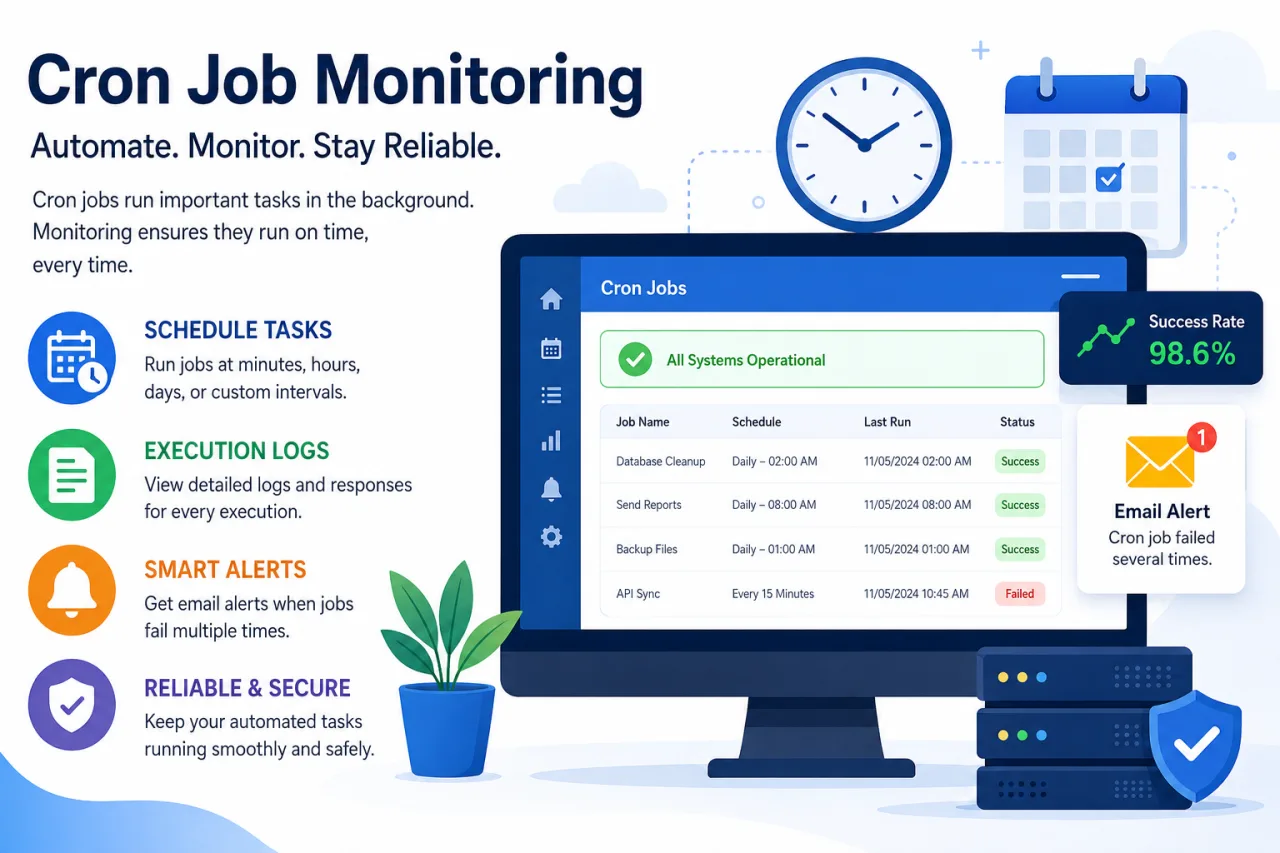
Cron jobs are the quiet workers behind many websites. They run backups, refresh data, send reports, clean databases, update feeds, and check APIs without needing a developer to click a button every time.
What Is a Cron Job?
A cron job is a scheduled task that runs automatically at a chosen time or interval. It can run every minute, every hour, once per day, once per week, or on a custom schedule. For website owners, cron jobs are useful because they keep important background work moving without manual effort.
Common Cron Job Examples
Many websites use cron jobs for database cleanup, email queues, sitemap generation, cache refreshes, uptime checks, backup scripts, payment checks, and API synchronization. If a website depends on repeated tasks, cron jobs are usually part of the system.
Why Cron Job Monitoring Matters
A cron job is only useful if it actually runs. If a scheduled task fails silently, the website owner may not notice until users complain or important data is missing. Cron job monitoring solves this problem by tracking executions, showing logs, and helping detect failures faster.
Execution Logs Help Find Problems
Logs show when a cron job ran, what response it received, and whether the task completed successfully. This is useful for developers because it gives a clear history instead of guessing what happened.
Alerts Save Time
Email alerts can notify you when a job fails several times. This helps prevent small issues from becoming large problems, especially for tasks like payment checks, server backups, and API updates.
How Online Cron Services Help
An online cron service lets you manage scheduled URL calls from a web panel. You do not need to edit server crontab files manually. This is useful for beginners, agencies, and developers managing multiple websites.
Useful Features for Website Owners
A good cron job service should include scheduled executions, import and export tools, grouped jobs, execution history, failure tracking, timeout control, and plan limits that keep usage stable.
Better Control Without Server Access
Not every website owner has direct server access. Online cron tools make automation easier because tasks can be managed from a dashboard instead of SSH.
Final Thoughts
Cron job monitoring is not just a developer feature. It is a reliability tool for any website that depends on repeated background tasks. With logs, alerts, and clear scheduling, automated jobs become easier to manage and safer to trust.